2026Web · Automation
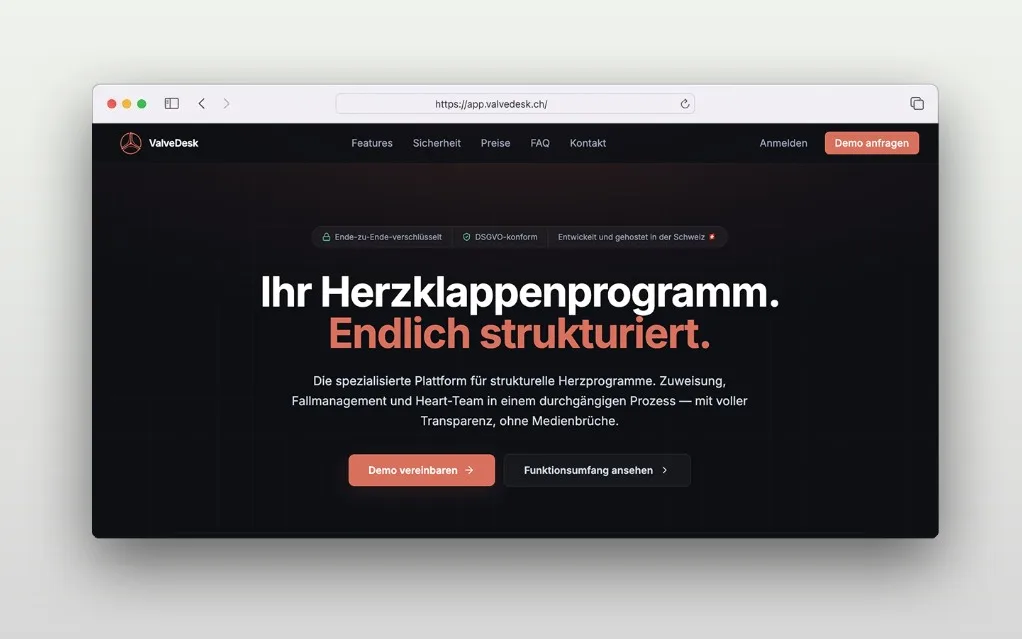
ValveDesk
Centralized registration and end-to-end management of every patient in a structural heart team.
Not as an isolated tool, but embedded in clear workflows, understandable interfaces, and real day-to-day operations.
Clear, measurable outcomes instead of generic buzzwords.
Recurring tasks run in a standardized and automated way.
Fewer handovers, less rework, and shorter process cycles.
Clear status visibility, reliable handoffs, and actionable reporting.
Move website inquiries into CRM automatically with assignment and follow-up triggers.
Generate, validate, and send invoices automatically after relevant events.
Standardize approvals, task routing, and reminders across teams.
Feed dashboards and reports automatically with up-to-date multi-source data.
Automate segmentation, personalized communication, and campaign sequences.
Standardize onboarding with automated tasks, handoffs, and documentation.
Combine online booking, waiting lists, and reminders into one coherent process.
Structure secure data handling, patient communication, and compliant documentation flows.
Integrate video consultation, patient portals, and internal systems in a practical way.
Automate deadlines, documentation obligations, and auditable traceability.
Automate recurring tasks, approvals, and internal notifications.
Connect existing tools into a stable end-to-end data flow.
Identify bottlenecks and remove unnecessary process steps.
Tailored automation logic built for your exact operational setup.
Structured, pragmatic, and focused on real-world execution.
Map your current workflows, identify bottlenecks, and prioritize the highest-impact opportunities.
Design and integrate automation into your existing systems and day-to-day operations.
Monitor performance, refine details, and continuously improve based on real usage.
In a short initial call, we identify the biggest leverage points and define a realistic implementation sequence.
GET IN TOUCH